
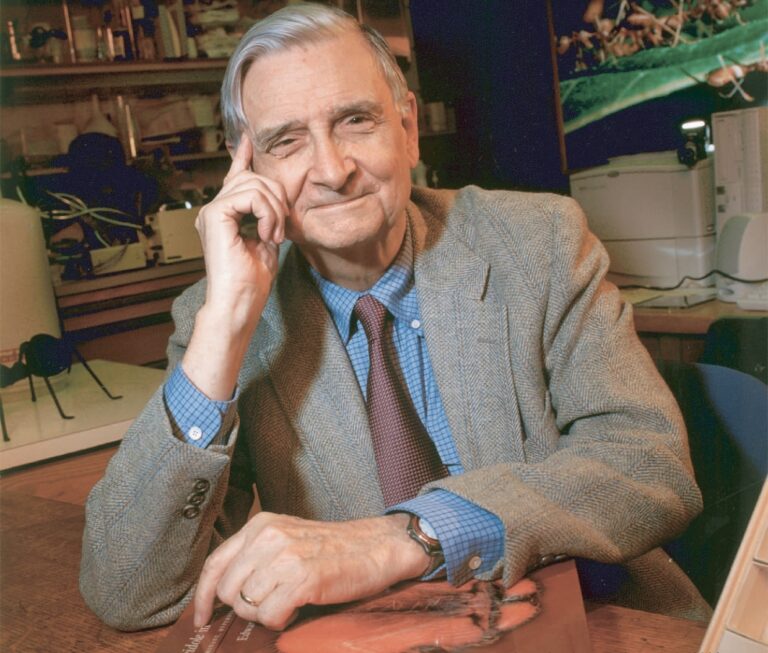
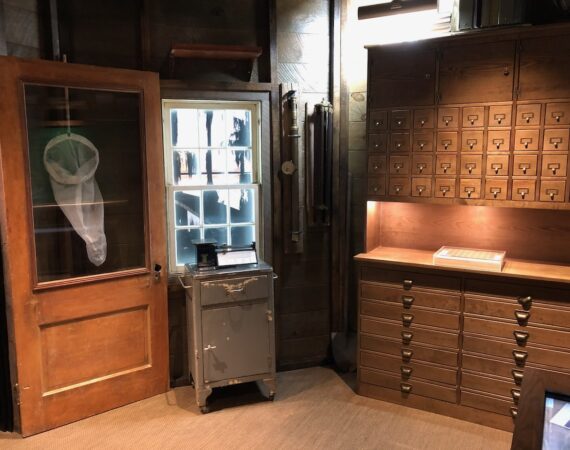
The National Maritime Museum of the Gulf in Mobile Alabama, also known as Gulf Quest, had an old exhibit area they wanted to update. Inside the museum was a small shack that had been used to take visitors on a simulated experience through a hurricane. They wanted to refresh the exhibit area and do so for the anniversary of famed naturalist E.O. Wilson. Few people know it, but he spent much of his childhood scampering through the swamps and forests of the Mobile-Tensaw River Delta, and developed his love for the “smallest of the small” there around Mobile Bay.
We were sub-contracted by DesignForce to build a centerpiece interactive for this new exhibit, an interactive simulation based on one of Wilson’s greatest discoveries that ants drop two different pheromones as they travel: one which leads to food, and a second which points the way home.
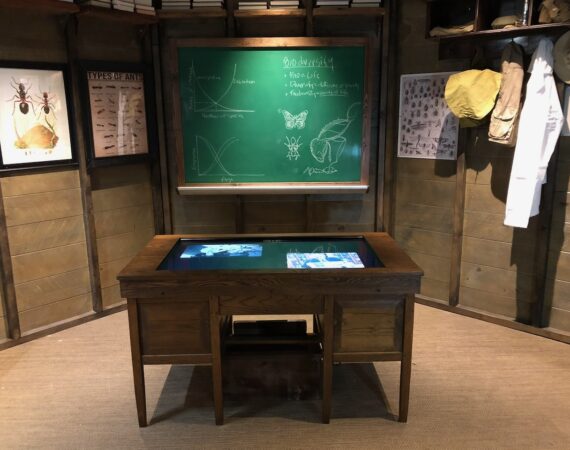
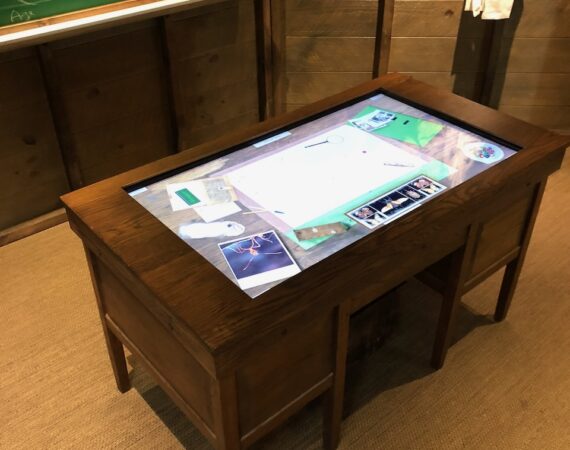
For this simulator, QuietPixel developed simple “bot” logic for each ant. We then set a bunch free on an interactive recreation of Wilson’s research desk.
Visitors can drag out pieces of candy, and use their fingers to drag out pheromone trails that lead to food. When an ant comes across these trails, they are tempted to follow them to food.
At the same time, each ant drops its own “food is this way” pheromones. Each ant that follows a trail strengthens it and encourages others to follow. But, and this is important, pheromones fade over time. Bad trails, or trails to places without food, naturally fade out, and only the best trails survive.
When an ant gets full, it heads back to the nest and begins dropping “I am going home” pheromones. The best trails back to the nest get stronger, and the worst fade out.
These simple mechanisms makes it look like ants have an emergent “super intelligence” greater than the brain power of any one ant.